
Affinity Biosciences
DF7427
$280.00
100μl
| 100μl - | $280.00 | |
| 200μl - | $350.00 |
CCL5 Antibody
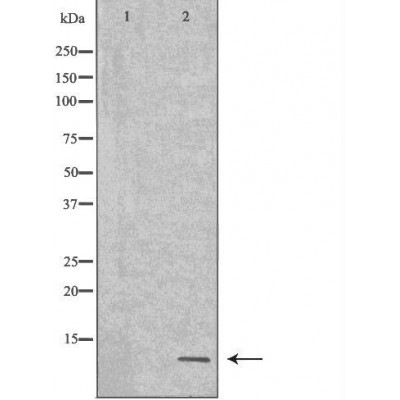 Western blot analysis of Jurkat whole cell lysates, using CCL5 Antibody. The lane on the left is...
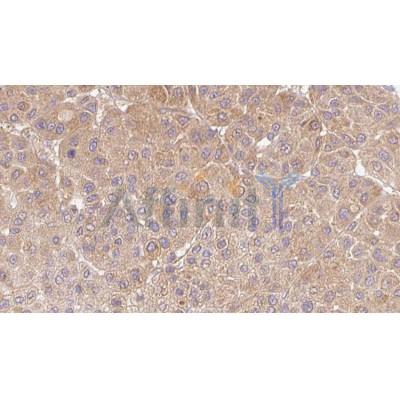 DF7427 at 1/100 staining Human Melanoma tissue by IHC-P. The sample was formaldehyde fixed and...
Antigen:
C-C motif chemokine 5
Synonyms: EoCP; Eosinophil chemotactic cytokine; SIS-delta; Small-inducible cytokine A5; T cell-specific protein P228; T-cell-specific protein RANTES; CCL5_HUMAN; O43646; P13501; Q0QVW8; Q4ZGJ1; Q9NYA2; Q9UBG2; Q9UC99
Host:Rabbit
Reactivity:Human
Application:Western Blotting; Immunohistochemistry; ELISA
Isotype:IgG
Clonality:Polyclonal
Aliases:Beta chemokine RANTES; Beta chemokine RANTES precursor; C C motif chemokine 5; CCL 5; CCL5; CCL5_HUMAN; Chemokine (C C motif) ligand 5; Chemokine CC Motif Ligand 5; D17S136E; EoCP; Eosinophil chemotactic cytokine; MGC17164; RANTES(4-68); Regulated upon activation normally T expressed and presumably secreted; SCYA 5; SCYA5; SIS delta; SIS-delta; SISd; Small inducible cytokine A5 (RANTES); Small inducible cytokine A5; Small inducible cytokine subfamily A (Cys Cys) member 5; Small-inducible cytokine A5; T cell specific protein p288; T cell specific RANTES protein; T cell-specific protein P228; T-cell-specific protein RANTES; TCP 228; TCP228
Description:
Chemoattractant for blood monocytes, memory T-helper cells and eosinophils. Causes the release of histamine from basophils and activates eosinophils. May activate several chemokine receptors including CCR1, CCR3, CCR4 and CCR5. One of the major HIV-suppressive factors produced by CD8+ T-cells. Recombinant RANTES protein induces a dose-dependent inhibition of different strains of HIV-1, HIV-2, and simian immunodeficiency virus (SIV). The processed form RANTES(3-68) acts as a natural chemotaxis inhibitor and is a more potent inhibitor of HIV-1-infection. The second processed form RANTES(4-68) exhibits reduced chemotactic and HIV-suppressive activity compared with RANTES(1-68) and RANTES(3-68) and is generated by an unidentified enzyme associated with monocytes and neutrophils (PubMed:16791620, PubMed:1380064, PubMed:8525373, PubMed:9516414, PubMed:15923218). May also be an agonist of the G protein-coupled receptor GPR75, stimulating inositol trisphosphate production and calcium mobilization through its activation. Together with GPR75, may play a role in neuron survival through activation of a downstream signaling pathway involving the PI3, Akt and MAP kinases. By activating GPR75 may also play a role in insulin secretion by islet cells (PubMed:23979485).
Purification:The antiserum was purified by peptide affinity chromatography using SulfoLink™ Coupling Resin (Thermo Fisher Scientific).
Concentration:1mg/ml
Buffer form:Liquid
Storage buffer:Rabbit IgG in phosphate buffered saline , pH 7.4, 150mM NaCl, 0.02% sodium azide and 50% glycerol.Store at -20 ¡ãC.Stable for 12 months from date of receipt
Specificity:
CCL5 Antibody detects endogenous levels of total CCL5.
Storage conditions:Rabbit IgG in phosphate buffered saline , pH 7.4, 150mM NaCl, 0.02% sodium azide and 50% glycerol.Store at -20 °C.Stable for 12 months from date of receipt.
Product specifications
Product specifications
Preparing document for printing...
0%